Research

My research explores how robots can perform long-horizon contact-rich manipulation tasks efficiently and robustly in complex human-centered environments. I approach this problem through three connected directions: efficient long-horizon manipulation, robust contact-rich manipulation, and adaptive robot learning.

01 · EFFICIENCY

Efficient Long-Horizon Manipulation

I develop learning-guided planning methods that extract reusable task structure, decompose complex problems, and support efficient execution and replanning.

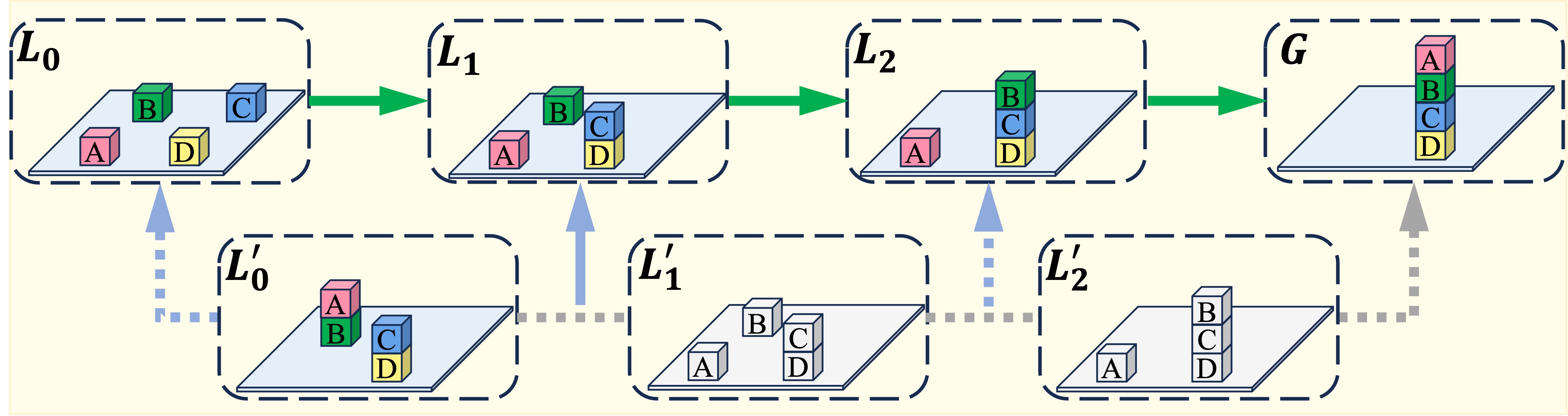
Learn2Decompose multi-object manipulation planning overview

Learn2Decompose

Long-horizon multi-object manipulation creates large and difficult planning problems. Learn2Decompose mines reusable subgoal structures from demonstrations, learns scene-to-subgoal distances with graph neural networks, and parallelizes planning across object subsets. The method was evaluated in multi-object manipulation and kitchen domains.

Role: Project lead — led the project end to end, including problem formulation, method development, implementation, experimental evaluation, and manuscript preparation.
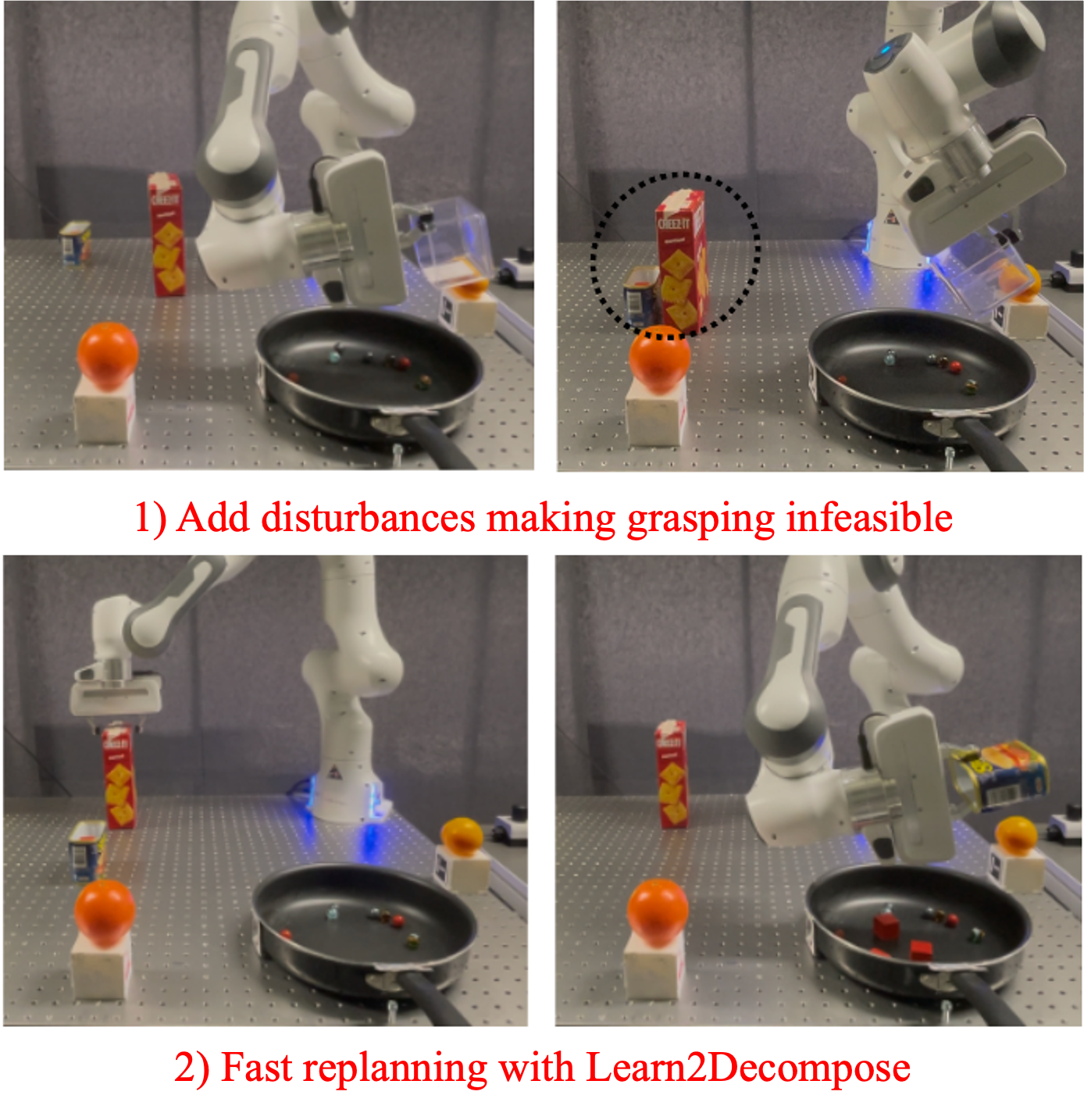
Logic-LfD multi-step manipulation learning and planning overview

Logic-LfD

Logic-LfD learns reusable task logic from limited demonstrations and combines it with optimal-control motion skills and reactive task and motion planning. It supports generalization and replanning under disturbances during multi-step manipulation tasks, including real-robot block-manipulation experiments.

Role: Project lead — led the project end to end, including problem formulation, method development, implementation, experimental evaluation, and manuscript preparation.
02 · ROBUSTNESS

Robust Contact-Rich Manipulation

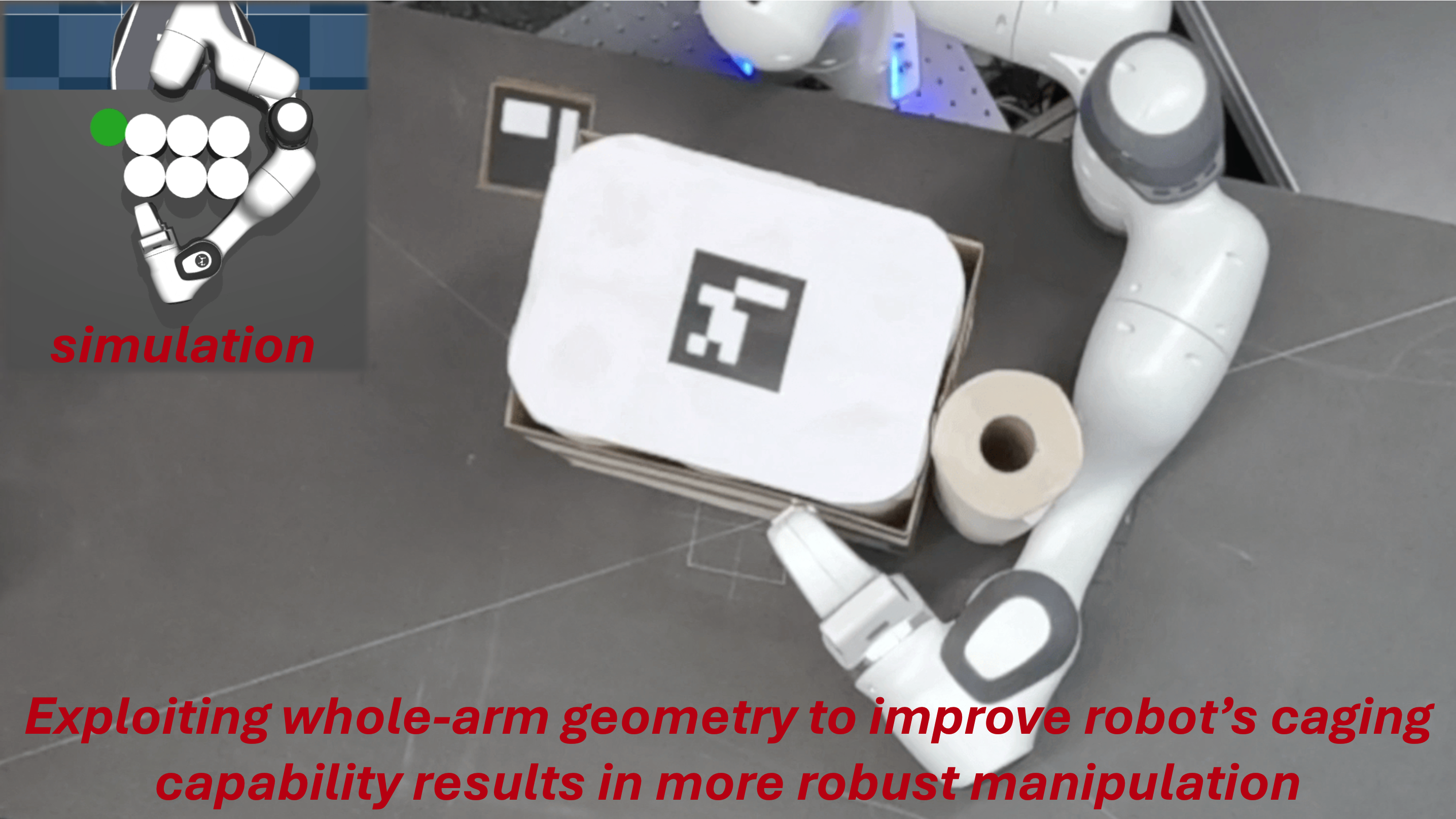
I investigate how geometry, whole-arm contact, caging, and compliant interaction can make manipulation robust to disturbances and model mismatch.

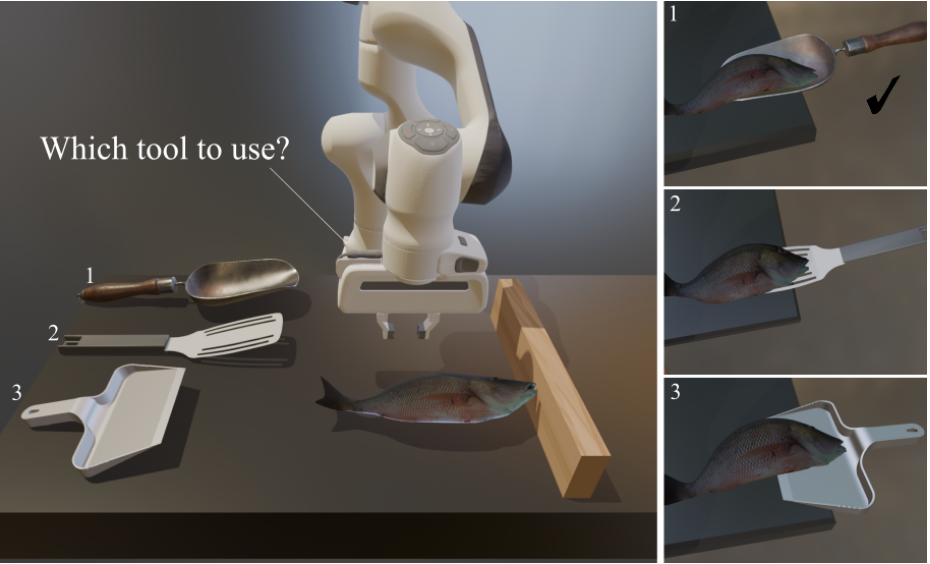
Robustness-aware tool selection and manipulation planning setup

Robustness-Aware Tool Selection and Manipulation Planning

This work jointly reasons about tool geometry and robot configuration for robust tool-use manipulation. Learned energy-informed guidance supports planning under geometric constraints and task variations.

Role: Co-lead — contributed to the robustness-aware planning formulation, method development, and experimental evaluation.

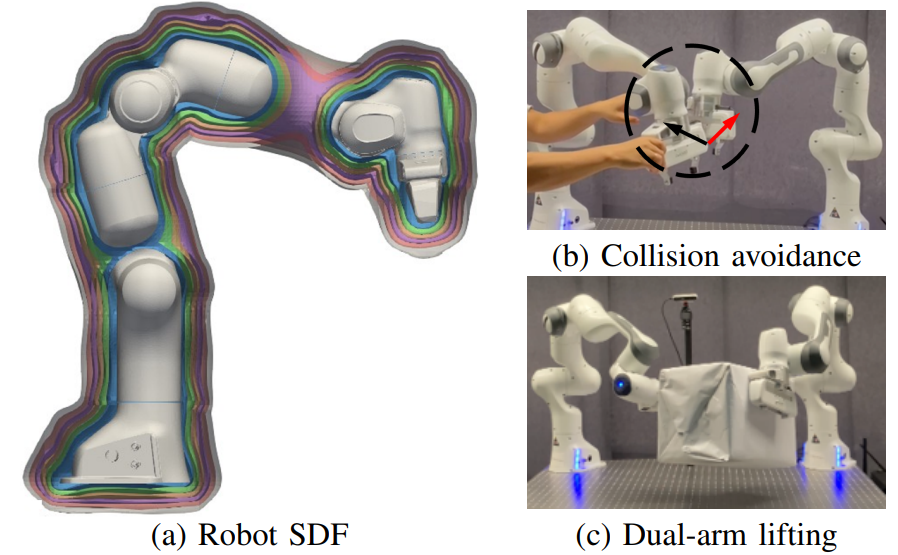
Robot geometry represented as distance fields for whole-body manipulation

Robot Distance Fields

Robot Distance Fields provide a kinematics-aware implicit representation of robot geometry for efficient distance and gradient queries. The representation supports applications including dual-arm collision avoidance and whole-arm manipulation of large objects.

Role: Contributor — developed and evaluated the dual-arm self-collision-avoidance application in both simulation and real world.

03 · ADAPTATION

Adaptive Robot Learning

I use imitation learning, reinforcement learning, and Sim2Real techniques to adapt manipulation and locomotion policies for deployment on physical robots.

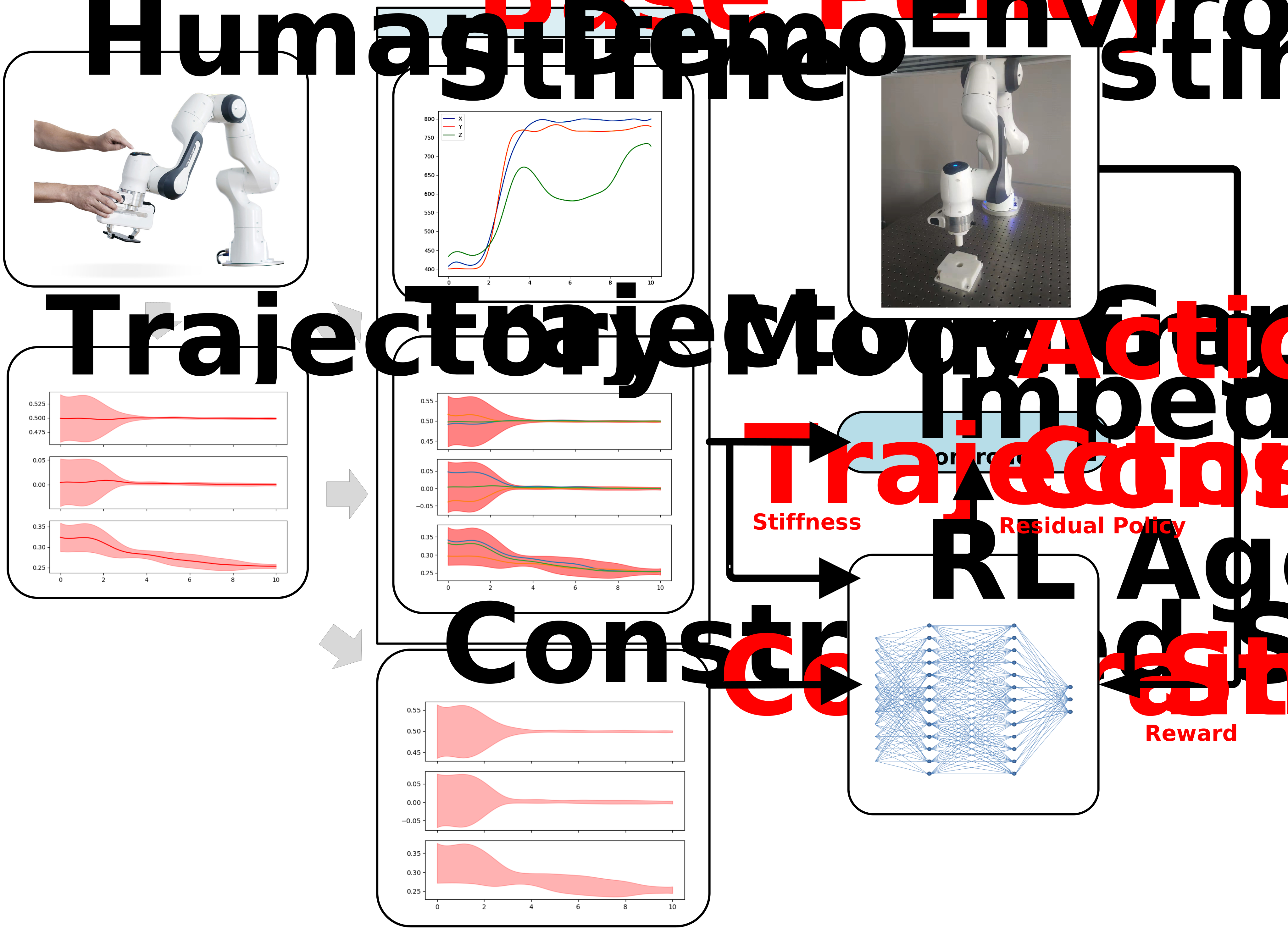
Residual reinforcement learning framework for compliant manipulation

Residual Reinforcement Learning for Compliant Manipulation

This project combines a demonstrated nominal manipulation skill with a reinforcement-learning residual for contact-rich tasks. Variable impedance control and constrained policy improvement support compliant interaction, with deployment on a real Franka robot for assembly.

Role: Project lead — developed and deployed the residual-learning framework and real-robot experiments.

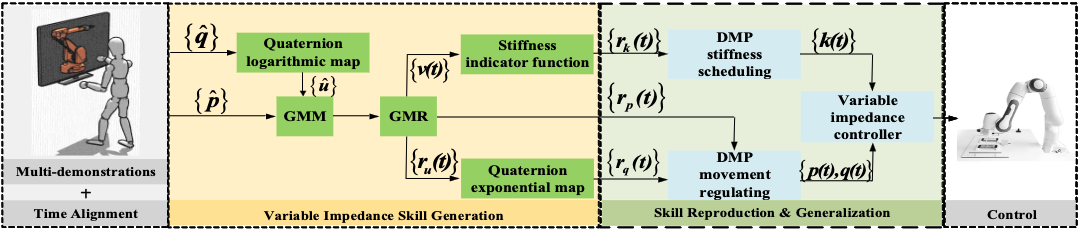
Variable-impedance manipulation skill learning from human demonstrations

Variable-Impedance Manipulation Skill Learning

This work learns variable-impedance manipulation skills from multimodal human demonstrations, combining motion and interaction information to reproduce and generalize compliant behaviors.

Role: Project lead — led the project end to end, including problem formulation, method development, implementation, experimental evaluation, and manuscript preparation.
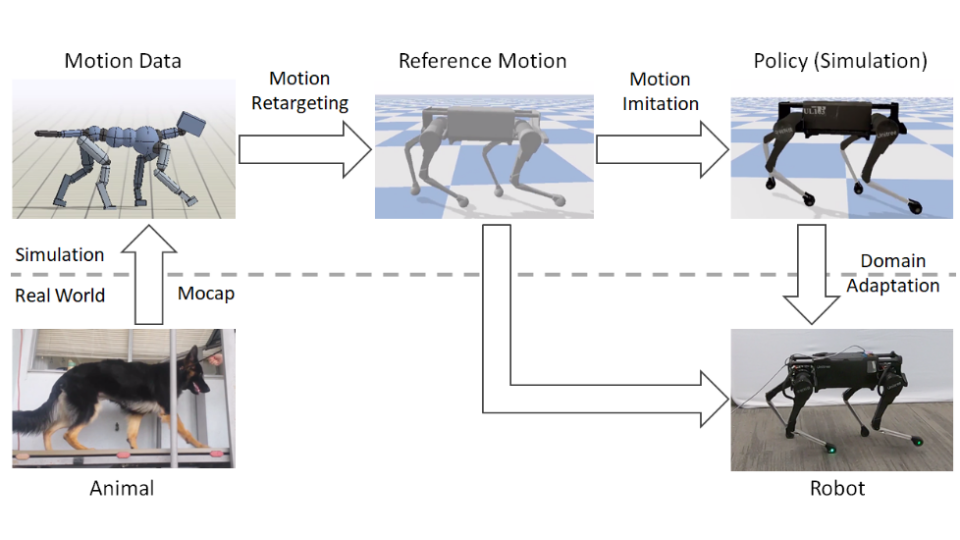
DeepMimic policy framework for quadruped locomotion Sim2Real transfer

Quadruped Locomotion Sim2Real

This project investigated policy architectures and simulation factors affecting the robustness and generalization of animal-inspired locomotion policies. The learned behaviors were transferred from simulation to a custom-built quadruped robot.

Role: Main contributor to Sim2Real transfer — investigated simulation and policy factors and conducted the real-robot transfer experiments.